T&B Group began in Knysna in 1985, manufacturing handcrafted log homes. Over the following four decades, the business expanded into timber building systems, custom homes and resort projects far beyond South Africa.
A July 2026 feature by Joy Crane explores that journey, tracing how a local manufacturer developed the skills to prepare buildings in its own factory and deliver them to remote destinations. Behind the finished homes and resorts is a story of evolving construction methods, detailed preparation and experience gained in challenging locations.
Beginning with solid log homes
John Tanner founded T&B Log Homes with an interest in developing a more systematic approach to timber construction. He invented and patented a method of compressing solid logs under downward pressure to create premanufactured construction elements.
That early work established a principle that remains central to the business: preparing building components before they reach the construction site.
Dave Simpson, who has been involved with the company for much of its history, later took over its management from the Tanner family. The business developed into T&B Group, bringing together solid log construction, timber frame systems and the REVO building system.
Its range also expanded to include custom timber designs, tented camps and projects combining timber with conventional construction materials.

The unexpected origins of REVO
REVO’s beginnings were practical. The system was originally developed as a low-cost housing solution for Angola, with components designed for assembly using basic power tools and hand tools.
As the resort side of the business grew, the team recognised that the same approach could serve a different market. A system designed to simplify assembly could also be useful where access, equipment and local resources were limited.
REVO evolved to serve residential and resort projects, with its name becoming an acronym for Resort & Residential Evolved.
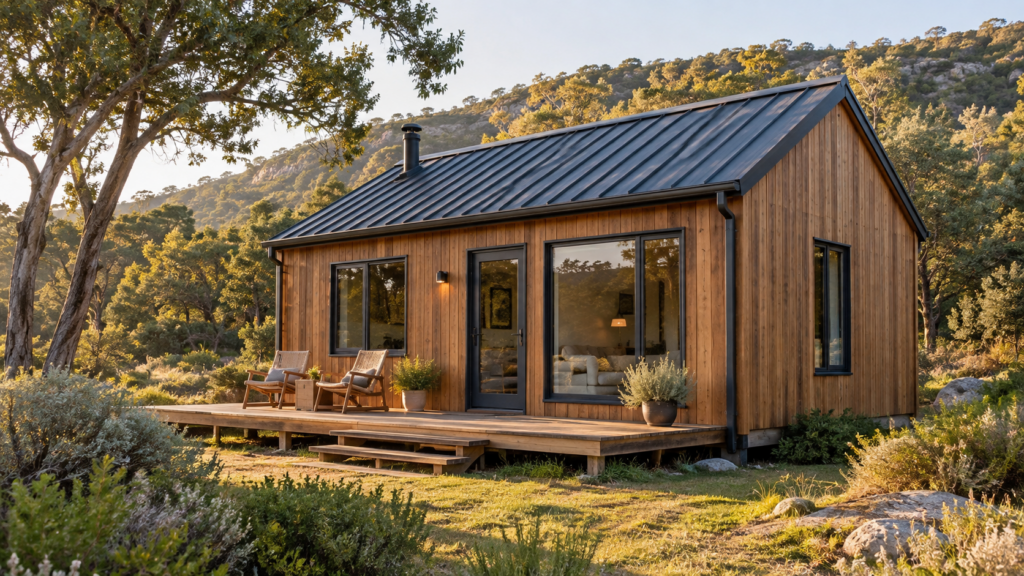
The system uses laminated timber posts and beams, with infill panels or window and door units fitted between them. Components are manufactured in advance, labelled and matched to the project drawings. Customers managing their own installation receive drawings and an instruction manual to support assembly.
Preparing the building in Knysna
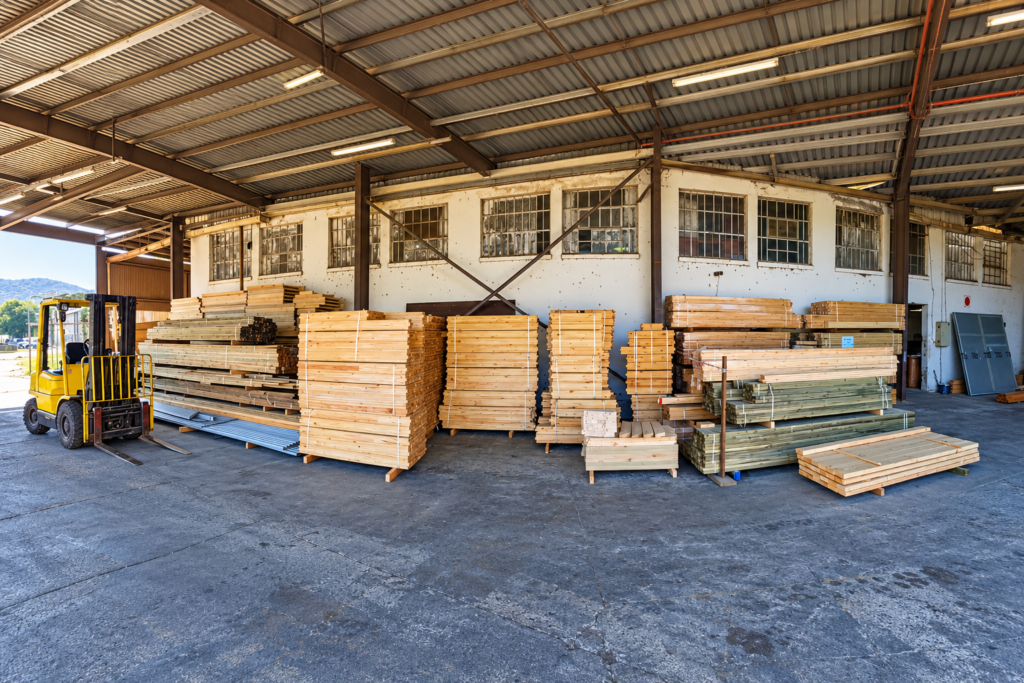
The factory plays a central role in how T&B Group approaches construction. Computer-aided design and manufacturing, together with CNC machinery, allow components to be prepared to the dimensions and connections required for each project.
In the feature, Dave describes the objective simply: “Our goal is to make construction an on-site assembly function”.
That means decisions about how parts connect, how they are identified and how they will be installed need to be addressed before dispatch. The work at the factory supports the sequence of work that will follow on site.
Premanufacturing also leaves room for architectural variety. The group’s custom projects can combine timber with stone, brick, concrete or steel, with engineering and detailing developed for the particular building. Standardised preparation does not require every finished home or lodge to look the same.
Getting the building to its destination
For an island or mountain project, manufacturing is only part of the task. The components still need to arrive in the right place, in the right order and with the necessary documentation.
The feature describes how transport planning accounts for local conditions, from road access in mountainous areas to vessels suited to shallow coastal waters. Permits, clearances and the availability of suitable transport all influence the delivery plan.
Sending prepared components changes what needs to travel. Instead of relying entirely on fabrication at the destination, the team can organise shipments around the building elements required for assembly.
Relationships with experienced logistics partners help connect the factory programme with the site programme. A carefully prepared component is only useful to the construction team once it has reached them.
Looking beyond the accommodation
A remote resort needs more than guest rooms. Water, wastewater treatment and power supplies can be just as important to making the development work.
T&B’s scope can include desalination and water treatment plants, wastewater systems, generators and solar power installations, depending on the project requirements.
Where the group is appointed to provide a complete turnkey service, the work also involves coordinating architects, engineers, contractors and other specialists. This connects the design of the buildings with the infrastructure and services needed to operate them.
It is an extension of the same practical thinking behind the building systems: consider what the finished project requires, then plan how each part will be provided.
Four decades of adapting to different projects
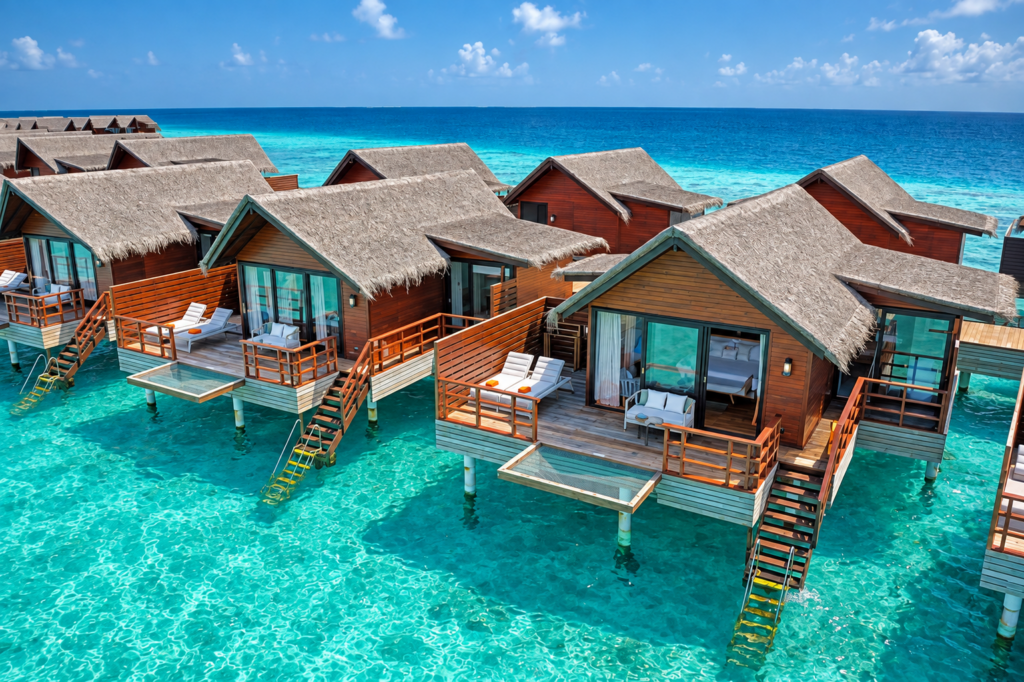
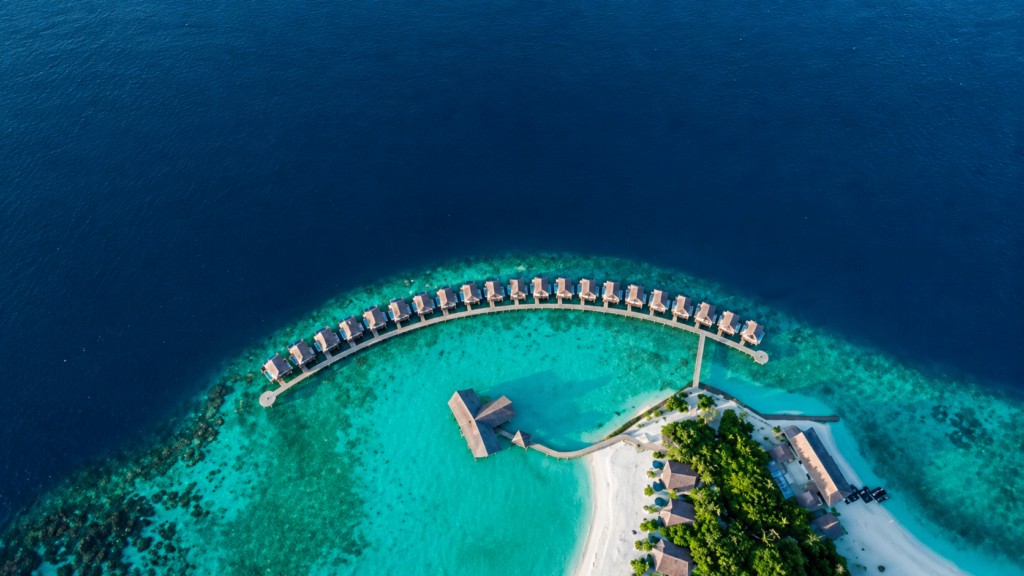
The July 2026 feature reports that T&B Group has supplied kits and/or supervised construction for more than 40 hotels, beach resorts, mountain lodges, and fishing and golf estates worldwide.
The company’s reach has grown through technical experience as well as relationships with agents and installers in international markets. Its work now serves destinations including Mauritius, the Maldives and the Caribbean.

Yet the connection to Knysna remains. The factory is still where design information becomes physical building components, ready for a particular site and a particular journey.
From the original solid log homes to later residential and resort systems, T&B Group’s development shows how one approach to construction can evolve through different uses. Preparing more of the building before delivery has remained central, while the designs, destinations and requirements have continued to change.
Based on Joy Crane’s July 2026 feature, “Knysna’s T&B Group provides timber construction solutions to the world’s island resorts”.